Welcome to the Good News Roundup for May 4, 2026
London Marathon sets new all-time fundraising record
Last week we brought you some heartwarming news from the Boston Marathon, and this week it’s some positive news out of the London Marathon.
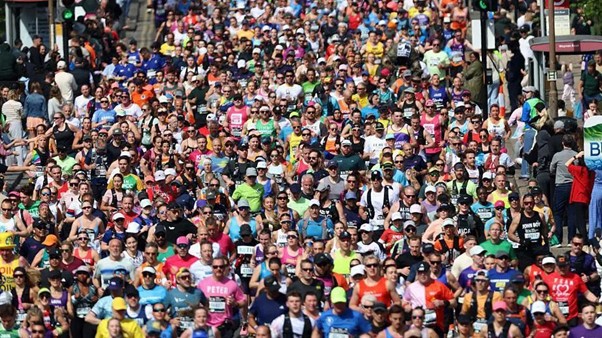
Organisers of the iconic event say they’ve set a new record as the biggest one-day fundraising event in the world – raising £87.5m for charity.
Of course, it wasn’t the only record broken that day, with Kenyan runner Sabastian Sawe becoming the first athlete to run the distance in under two hours, Ethopian runner Tigst Assefa broke her own women’s world record, and the event itself broke the Guinness World Record for the most finishers in a marathon.
Read more here.
[Image credit: Getty Images]
Missing dog found stuck on high-rise apartment balcony
When two-year-old Jack Russell dog Elbie went missing from a 13-storey apartment block in Sydney’s Northern Beaches, his owners initially thought the worst.
However after raising the alarm on social media, the dog was spotted two days later by a neighbour, wedged in a narrow gap on a balcony, alive but dehydrated.
Firefighters were called in to help navigate the tricky rescue as anxious onlookers watched from below and were able to free Elbie after about 20 minutes, lifting him through a window.
Read more on this happy ending here.
Tourist encourages man to call his doctor – he says she saved his life
A tour guide in Oak Island in the US is crediting a chance encounter with a tourist for saving his life, after she encouraged him to see a doctor.
Charles Barkhouse had completed a tour on the island in September 2025 when one of his group approached him, identified herself as a doctor and asked to feel his neck. After she did, she urged him to see his doctor immediately.
Charles followed the advice, later diagnosed with an aggressive form of thyroid cancer that required surgery and also saw more than 40 lymph nodes removed.
He never got the woman’s name, but Charles says she’s his guardian angel. Read more here.
World-first research shows human hearts can regenerate
Australian scientists have discovered for the first time that the human heart can regenerate after a heart attack.
Specialists from the University of Sydney, the Baird Institute and Sydney’s Royal Prince Alfred Hospital have shown that heart muscle cells can regrow, when previously it was thought areas of the heart were irreparably damaged after a heart attack.
While it’s not enough to prevent the impacts of a heart attack, it’s hoped the promising discovery may open up the potential for new therapies to amplify the heart’s ability to produce new cells.
The findings have been published in Circulation Research but you can read more here.